Monday, June 13, 2016

Entrepreneur = Experimenter


Gary Vaynerchuk is a pretty solid entrepreneur. Here is a meme he recently posted.

Kurt Lewin once said, “There is nothing so practical as a good theory.” I do not know about you but I definitely agree.

Could you imagine trying to do chemistry without the periodic table? Спасибо Dmitri!

We need theory as well as practice. We need a system and a framework. Hopefully, my blog helps. For example, my recent material on the buying cycle. Here and here.

Then, we need to iterate like crazy. We need speed and stick-to-itiveness.

Like I suggested last week, to succeed we must fail quickly.


Monday, June 6, 2016

Does it Solve a Real Problem?


Will Bitcoin ever take off? Who knows. I, for one, am not a big fan of trying to predict the future. However, one thing we might consider is whether or not Bitcoin solves a real problem.

Like I said, two weeks ago, I do not know very much about Bitcoin. That said, we can still have a short discussion. You see, no solution is perfect. Your aim should never be to create the perfect product. Well, you can shoot for perfection, just know you will never actually reach it.

Anyways, all economic decision are based upon costs and benefits. We call it a “Cost-Benefit Analysis.” If the benefits outweigh the costs we tend to buy.

In the case of Bitcoin, what is the benefit? From best I can tell, the benefit of using Bitcoin is the ability to avoid taxation. Listen, all western countries have established, and efficacious, forms of currency. So, why do we need a new one? Apparently, since Bitcoin is not overseen by a government, it is not taxed.

That strength can also become a profound weakness. The value of Bitcoin seems to be governed by market forces. Which is fine. But, as we know, markets are prone to bubbles and bursts. Just think of the tulip mania that occurred in the Netherlands.

From what I can tell, Bitcoin is a rather insecure form of currency. So, those willing to accept the risk will be rewarded by the absence of taxation. Again, I do not really understand Bitcoin. Whether or not it succeeds, only time will tell.

And, that is a key word. Time.

Every entrepreneur needs to be honest, with him or herself, about whether or not their solution solves a real problem. A big mistake people make is they try to guess, in advance, whether people will want their product.

The right move is to test your offering. Run a pilot program. In the parlance of aviation, get something the air and see if it flies.

Time is critically important in entrepreneurship. That being said, you want your time spent getting feedback from the marketplace. The goal should be to spend as little time as possible in the planning and preparation stages. Instead, run a test. This is the concept of “rapid-prototyping.”

Get something out into the market and see if people buy it. The market is an excellent feedback mechanism. The real challenge is understanding what the market is trying to say.

Just because people do not buy your offering does not mean it is no good. It does not mean your product must fail. The answer might be adjustment. You might not to tweak your product, your target customer, your distribution channel, etc. Or, the answer could be patience.

What we are looking for is proof of concept. If you have ever seen Shark Tank, you have heard about proof of concept. And, what proves your concept might work? In a word: sales.

If enough people buy your product, you will probably succeed. The key is to pour the right amount of gas onto that fire (Hint, err on the side of too much gas rather than not enough.) But, what if they are not buying? How long do you keep adjusting things until you give up?

Well, we have now hit upon one of the most difficult questions in all of entrepreneurship. When do you hold 'em and when do you fold 'em? Sorry, but I have no simple answers. Nor does any other honest person. It is a judgment call. And, like most anything, the only way to get good at making that call is practice.

Unfortunately, in the real world, practice is often synonymous with failure. The truth is, the chances of you hitting a home run, on your first at-bat, are very low. It is much more likely that you will fail. Perhaps even go bankrupt.

Here is a moment for you to pause. I want you to ask yourself a couple of important questions, “Am I willing to lose it all? If I did lose it all, would I have what it takes to bounce back?” If your answer to either of those questions is, “No,” entrepreneurship is not for you.

I am, most certainly, not being pessimistic. As a matter of fact, I am one of the more optimistic people you will ever meet. That said, I have also failed miserably. So, I would not be doing you any favors if I gave you rose-colored glasses.

You can succeed, at entrepreneurship, by creating real solutions to real problems. Just do yourself a favor and get time on your side. Be prepared to fail and try again. And again and again. A key to success, like Angela Duckworth teaches, is grit. If you do not know Duckworth, read her book, which came out just last month.

If you just keep iterating you will eventually succeed. The question is, do you have enough time? No one can answer that question except you. The paradox is this, can you fail fast enough to succeed? This is the entrepreneur's journey.


Monday, May 30, 2016

But Wait, There's More!


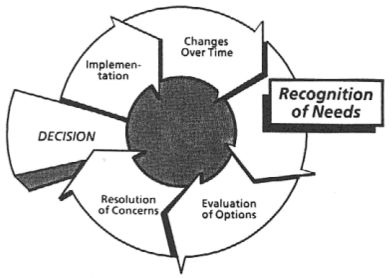
Last week, I introduced the idea of the buying cycle. Specifically, I spoke about the idea that entrepreneurs should spend a considerable amount of time in the “Recognition of Needs” phase. If you have not read the article, click here.

Once you have convinced your customers that they have a problem, you show them your wares. You move into the “Evaluation of Options” phase.

Few people call it the evaluation of options. We more commonly refer to it as a presentation. Let me ask you this, have you ever been to Costco and seen a presentation for the Vitamix blender? This is the essence of the “pitchman.”

Blenders are an interesting case study in the world of entrepreneurship. I do not claim to know much about blenders. But, apparently, the innovations contained within the Vitamin are strength and durability. Fair enough.

As I am sure you know, there is not much of a “Recognition of Needs” phase when it comes to blenders. In as much as the blender was invented in 1922, people are rather well-informed. There exists few, if any, souls who do not know the problem a blender solves.


For this reason, everybody enters the buying cycle (pictured above) in the “Evaluation of Options” phase. Again, this is the presentation stage. Which is why it makes a lot of sense to give demonstrations at Costco

I have never timed how long the Vitamix presentation is. But, it can be rather thorough. This only makes sense in light of the fact that the machines usually range around $400-600.

Contained within this group-presentation, you will also find the “Resolution of Concerns” phase of the buying cycle. How would you resolve the concerns people might have regarding the purpose of an expensive blender?

Well, you would have people give their testimonials about how well the machine has worked for them (though they do not do this at Costco.) You would also offer special payment arrangements, warranties, money-back guarantees, etc.

I only offer the Vitamix example in hopes that you can visual the lesson of these two phases of the buying cycle. How you facilitate an evaluation of your option, and how you resolve your prospective customers' concerns, will be dependent upon many variables.

Regardless of how you do it, the point is, you need to cover these three pieces of the buying puzzle. For the most part, they go roughly in order. But, do not allow yourself to think the process must be linear.

Sometimes things happen. A question can come up, an unexpected event can occur, or any of a host of things can cause the process to go in less than a straight line.

The important thing to embrace is the fact that selling is an integral part of entrepreneurship. And, in order to effectively sell your creations, it in is your best interest to understand how purchasing decisions are made.

I hope this helps.


Monday, May 23, 2016

Selling Innovation


As promised, let us talk a little bit about selling innovation. Last week I asked the question, “How do you sell?” because selling is one of the two entrepreneurial functions.

The thing is this, not all sales processes are created equal. Unfortunately, a lot of advice about selling has been built on the premise that selling is selling. It is just not true. (Remember that old commercial saying, "Motor oil is motor oil"?)

To put it in the simplest of terms, people do not buy things until they have a problem. Some problems people are able to identify on their own. If you are out of Captain Crunch, you know you gotta problem.

For this reason, the way you sell cereal is different from the way you would sell houses. Although not as different as you might think. In both cases, your customer makes their decision without you.

Meaning, people decide to buy cereal, or sell their house, without the help of a salesperson. It is a similar situation with car sales. In all three of these cases, people understand the problems and the solutions.

The sales environment becomes different when we are talking about true entrepreneurship. One way to think of the job of an entrepreneur is that s/he sells innovation.

Innovation can take many forms but, one thing all innovations have in common, is they bring new value to the marketplace. Stated differently, innovation is about solving problems that have not been solved before.

Usually the problem is seemingly minor. Uber has quickly become an enormously successful company. And, when you think about it, the problem Uber solves is pretty simple. Uber is more convenient than a taxicab, thereby saving us time.

Waiting for a cab is not a huge problem. It is not cancer. But, that is how the economy progresses. Lots of little improvements add up to big changes.

Ok, so, as I have said, people do not change their situation, people do not buy things, until they have a perceived problem. As an entrepreneur, this becomes a real challenge, because people do not generally spend time thinking about problems that have no solutions.

As entrepreneurs, we are bringing new solutions to the market. This means, in order to sell innovation, we need to make people aware of their problems. Stated differently, if you sell innovation you need to “break” the person's current situation.

Below you will see a picture depicting the buying cycle which people go through. The image was created by the legend himself, Neil Rackham.


You only need to study the image for a minute to realize that entrepreneurs should spend most of their time working on the “Recognition of Needs” phase. As an entrepreneur, you sell a new solution. So, you need to make people realize they have a problem. A need.

How do we help people realize they have a problem? Well, there are lots of ways but the most effective method is the use of questions. Questions are the levers of change.

Think about it, how do you become aware of the existence of a problem? If you really think about it, I believe you would agree that you become aware of a problem by asking yourself questions.

As an example, how do you know if you are gaining too much weight? With questions, of course. You might ask yourself, “Are I getting too fat?” Or, “Am I becoming unhealthy?” Or, “I wonder how my heart is doing?” Or, “Should I buy some bigger clothes?”

You get the point. We identify problems through the use of questions. Everybody does it privately and, as an entrepreneur, we need to do it publicly as well.

To help people appreciate the solution you provide you are well-advised to ask questions to help them realize the problems that exist. I will give you one last example so you can tune-in to your own inner monologue.

Lately, I have been thinking about this thing called Bitcoin. If you do not know what Bitcoin is, you just asked yourself, “What is Bitcoin?” And, there we have question number one.

I will not, for one second, act like I am an expert on Bitcoin. In fact, I know very little about the service. What I do know is, “Bitcoin is a digital asset and a payment system,” according to Wikipedia.

Here is what I am trying to determine. Do I need to use Bitcoin? As of yet, my answer is, I do not know. I am trying to understand the problems that Bitcoin solves. And, I encourage you to do the same.

As you think through what Bitcoin can do for you, pay close attention to your thoughts. What you will find is that you ask yourself a lot of questions. And, that is the point of this post.

If you want to sell innovation, you need to help people understand your solution by helping them realize the problem. And, in order to do that I recommend we all master the use if questions.

Let me know how it goes.


Monday, May 16, 2016

How Do You Sell?


Two weeks ago, I asked the question, “What do you sell?” If you have not yet read it, click here. In a kind of weird way, in that post, I encouraged you to not answer my question.

As turns out, most people can answer the question, “What do you sell?” Unfortunately, it is the wrong question. As I mentioned, in that previous post, the better question to ask is, “Why do your customers buy?”

This is a really important point. And so, last week, I talked about Drucker's marketing view. Drucker once wrote the following about marketing, “It encompasses the entire business. It is the whole business seen from the point of view of its final result, that is, from the customer's point of view.”

Again, the key is the customer's point of view. Are you still with me? To answer the question, “How do you sell?” you really need to consider how people buy.

The first thing to consider is the complexity of your customer's decision. How complex is the decision? How much help, and education, does the customer need to make the right decision?

Let us mention some simple decisions. How much help do you need in selecting a breakfast cereal? My guess is, not very much. For this reason, the manufacturer puts the cereal on the shelf, at the grocery store, and you pick it up when you need it.

How much help do you need buying a car? Probably not much. Most people have already selected the car they want (or have whittled the list down to just a few) by the time they walk onto the car lot.

With all due respect to people who sell cars, they do not provide much in the way of value. The finance department helps the customer acquire the necessary funds. But, the car salesperson basically grabs the keys and goes on a test drive.

How about a Realtor? How much helped do people need with the decision of whether or not to sell their house? The answer is, again, not much. The point is, it is important to know people's decision process in order to properly sell to them.

If I were a Realtor I would simply contact people and ask if they were considering selling their house. Of course, this would include FSBO's and Expired Listings. For the most part, the best sales process, for a real estate agent, is to be top of mind when it comes time to sell. For this reason, notepads or calendars with your picture make a lot of sense.

As a matter of fact, it is the same with car salespeople. If I sold cars I would contact as many people as possible and simply ask them if they are in the market for a new car.

Whether you are selling breakfast cereal, cars, or houses, the customer does not need much help making a decision. In the case of cars they may need help with financing and, in the case of a home, they may need help finding a buyer. But, let us not get things confused. What we are talking about is the decision to become a customer.

Hopefully, you are still with me. Why am I saying all this? The reason is because all of this changes when we are talking about entrepreneurship. If you are a true entrepreneur, what you are selling is innovation. And, when you sell innovation, the customer needs more help.

Drucker called innovation, “The act that endows resources with a new capacity to create wealth.” The key part of that phrase being, “New capacity.” When it comes to innovation, people often do not understand what you are offering them.

The fact that people have a problem understanding your innovation is what led Steve Jobs to famously say, “A lot of times people don't know what they want until you show it to them.” That single sentence is the starting point for selling innovation.

Next week I will discuss the innovation sales process.


Monday, May 9, 2016

The Two Entrepreneurial Functions


I have said it once. I will say it a thousand times. There are two, and only two, entrepreneurial functions. They are innovation and marketing. For more information, click here and read an earlier post.

Of course, I was not the person to first identify the two entrepreneurial functions. That credit belongs to Peter Drucker. However, I do have one bone to pick with Mr. Drucker.

Actually, it is not a bone to pick. It is a matter of clarification. It is a matter of semantics. I prefer to use the word “selling” instead of “marketing.”

The problem arises from the definition of selling versus marketing. What Drucker called “selling” I would label “peddling.” In either case, what Drucker and I are talking about is convincing people to buy the products you have produced. The alternative would be to produce things people want and freely chose to buy.

Drucker would say that selling focuses on the needs of the seller, while marketing focuses on the needs of the buyer. I understand what he means. But, what about consultative selling?

The fact is, it is completely possible for a salesperson to focus on the needs of the customer. In fact, lots of salespeople already do it. Whether you call it “consultative selling” or “solution selling,” what we are talking about is needs-based selling. And, needs-based selling fits Drucker's definition of “marketing.”

Last week I asked the question, “What do you sell?” Now, we should turn our attention to how we sell. But, before we do that, I would like to draw your attention to the power of professional selling. This is important because, again, selling is one of the two main functions in business/entrepreneurship.

As we all know, the economy collapsed a few years ago. One question that pops up is can we start, or expand, our companies in a weak economy? The answer is yes. But, we need to do it right. We need to listen to Drucker and focus on the needs of the customer.

Focusing on the needs of the customer is what consultative sellers do. One of my favorite consultative sellers is a gentleman by the name of Mark Roberge.

Roberge is the Chief Revenue Officer at a company called HubSpot. The innovation, which HubSpot brought to the market, is inbound marketing. And, due to their excellent salesforce, the company was able to grow, even during the recession. And, I do not mean grow a little...

Weak economies are, actually, a good time to expand because everybody else has chosen to contract. Back in February, Roberge published an article in the Harvard Business Review. The article was titled, “A Recession Doesn't Mean Your Startup Can't Grow.”

I think Mark's story is great. As was the article. And, since I want to highlight the importance of a good sales process, I have decided to pass it along to you. Here are the contents of Mark's HBR article:

So far this year, the stock market has been anything but stable. The correction for tech companies appears to be well underway. Instability overseas continues, causing rising concerns about the effect on the global economy. In the U.S., the Federal Reserve finds it difficult to commit to a plan for 2016.

If the economy continues to head south, what does it mean for entrepreneurs ready to scale their business? Should they hold off on growing sales? Should they take a more conservative approach?

My answer is no.

In my view, a down economy is the best time to build a sales team. In fact, I lived through the journey to tell the tale. I joined HubSpot, an inbound marketing software company, as the fourth employee and first salesperson in 2007. My role was to scale the sales team. Within a year, we had scaled from 100 customers to 700 customers. We had dozens of employees and a dozen or so salespeople. With $17 million in venture capital, we were ready to accelerate sales hiring even further. Life was good.

Then came October of 2008, the worst financial meltdown in decades. As an executive team, we were rattled. Would budget freezes slow down sales? Would future funding options dry up? Would we need to lay people off? Would our dreams of building “the next big thing” be foiled by circumstances outside of our control?

To my surprise, things did not slow down. We were able to secure our next round of funding. We accelerated our pace of sales hiring. Seven years after that infamous day in 2008, we are a post-IPO company with a market cap of over $1 billion dollars.

Looking back, the 2008 economic downturn may have helped us more than it hurt us. Here are five reasons why:

High availability of talent. The “war on talent” has been a hot topic over the past few years. Attracting top caliber people into an early stage venture is arguably one of the most important tasks for the founding team. These early hires will figure out the business model, establish the culture, and ultimately recruit the next wave of employees to drive the business forward.

From the perspective of talent availability, the HubSpot sales team benefited immensely from the 2008 financial crisis. Within months of the market crash, layoffs at other companies yielded a sudden spike in available sales talent. The salespeople that lost their jobs were not necessarily the bottom of the barrel, either. In many cases, they were simply in the wrong division working on the wrong product at the wrong time.

As we continued to expand the sales team post crisis, the increased talent pool enabled us to raised the bar on the quality of salespeople we hired. These new hires went on to play crucial roles in developing our sales playbook and hiring and developing our next wave of salespeople. Eight years later, many of these early hires are still with HubSpot serving in senior sales leadership roles.

Must-have” versus “nice-to-have” value propositions. In a strong economy, “nice-to-have” value propositions can survive. Budgets are plump. Spending barriers are relaxed. As a salesperson, it is not overly challenging to “arm-twist” a friend or call in a favor to make a sale.

In a weak economy, “nice-to-have” value propositions are left to the wayside. Unless the product or service solves a mission critical issue at the buyer organization, no sale is made. A weak economy forces an organization to discover their “must-have” value proposition. For HubSpot, “more quality sales leads”— the value proposition offered by our software — spurred even the most risk averse organizations to open their purse strings. The 2008 financial crisis pushed us to discover this “must-have” value proposition early in our development, providing a strong foundation from which to build.

Unit economics versus unnatural growth. Over the past few years, market valuations, both public and private, have rewarded growth over unit economics. Historically, economic downturns have reversed the situation.

Market conditions in late 2008 forced us to re-focus HubSpot’s attention to unit economics. Customer success, revenue churn, and customer lifetime value often trumped conversations around revenue growth at board and executive meetings. The sales team was at the heart of this re-focusing effort. We began measuring salespeople based on the LTV of their customers, not their revenue generation. We even aligned sales commissions with unit economic metrics. Had we waited until we were two, thee, or even four times the size, this transition would have been exponentially harder – if not impossible. Our early focus on unit economics laid a healthier foundation from which to scale sales.

A better work ethic. “Motivating the salesforce” has crept up to be the top concern amongst sales leaders in recent market studies. It can be harder to motivate salespeople in a strong economy. They are constantly distracted with calls from outside recruiters, emails from friends about new high-paying jobs, and stories about products that are “selling themselves.”

In a down economy, self-motivation comes much easier. Suddenly, the recruiter calls offering lush salaries are replaced with horror stories from friends witnessing massive layoffs and the inability to find work. Employees and founders collectively realize an increased urgency to succeed as they are the final mile in ensuring the early stage venture survives financially.

Less competition. In a strong economy, venture and angel capital are flowing. Many people argue the supply of early stage capital in strong economies exceeds the volume of good ideas and good startup teams. This outcome is bad for everyone. Investors lose money on bad deals. Customers lose money purchasing bad services. Entrepreneurs attempting to create real value face distractions from bad competition.

As the market turned in 2008, we saw many of HubSpot’s early competition fade away, due to lack of execution, a weak value proposition, or both. The timing of this dynamic meant one less obstacle for us as we navigated our growth phase. By the time the capital markets bounced back, HubSpot had already established barriers that made it difficult for new entrants to gain traction.

The fate of the markets for the remainder of 2016 and beyond is yet to be seen. However, as an entrepreneur entering the growth phase of your business, reconsider whether a market turn is necessarily bad for your business. It could be a blessing in disguise.


Monday, May 2, 2016

What Do You Sell?


The Scottish writer, Robert Louis Stevenson, is quoted as saying, “Everyone lives by selling something.” What do you think? Do you agree? I do.

Too bad those words did not make it to the ears of Vincent van Gogh. Although accounts vary, ever so slightly, it is agreed that van Gogh did not sell very many of his paintings.

Most people agree van Gogh sold one of his paintings during his lifetime. Some, like art historian Marc Edo Tralbaut, contend Vincent sold two pieces. Either way, let's not split hairs.

The fact of the matter is, van Gogh relied heavily, on his brother Theo, for his livelihood. And, as you probably know, van Gogh suffered from mental illness, which ultimately led to his committing suicide. But, that is not the subject at hand.

My point is this, as we all know Vincent van Gogh is one of the most famous artists of all time. One of his paintings sold, in 1990, for $82.5 million.

Even still, during his life, Van Gogh could not even afford to feed himself. What a profound reality. This speaks to the powerful importance of being able to sell things.

I do happen to believe that severe mental illness will prevent a person from being able to sell things. Fortunately, these days we have a lot of great resources available to help the mentality ill.

So, again, what do you sell? Actually, a better question would be, what it is that people buy from you? If you have a job, your employer buys your time and expertise. Your employer buys your effort, at wholesale, and sells it at retail.

Regardless of what you do, I think it is important to be able to answer the question, what do you sell? And, as I have stated, it is even better to identify why people buy whatever it is that you sell. As it turns out, that exercise is a fair bit harder than it sounds.

By the way, the one painting van Gogh did sell is called, “The Red Vineyard.” Here it is:


Monday, April 25, 2016

Why You Should Be an Entrepreneur


In his book, The Monk and the Riddle, Randy Komisar makes the point that the reason to be an entrepreneur is to avoid the stultification of companies without a soul. I tend to agree.

I believe the main reason you should consider being an entrepreneur is so you can reach your fullest potential. A few years ago former Harvard Professor, Robert Steven Kaplan, wrote an article, for the Harvard Business Review, titled, “Reaching Your Potential.”

I thought it was a pretty good article. So, I have reproduced the article, below, in its entirety. The rest of this post are the words of Mr. Kaplan:

Ambitious professionals often spend a substantial amount of time thinking about strategies that will help them achieve greater levels of success. They strive for a more impressive job title, higher compensation, and responsibility for more sizable revenues, profits, and numbers of employees. Their definitions of success are often heavily influenced by family, friends, and colleagues.

Yet many ultimately find that, despite their efforts and accomplishments, they lack a true sense of professional satisfaction and fulfillment. During my career with Goldman Sachs, as well as over the past few years of teaching and coaching managers and MBA students at Harvard Business School, I have met a surprisingly large number of impressive executives who expressed deep frustration with their careers. They looked back and felt that they should have achieved more or even wished that they had chosen a different career altogether.

Consider a very successful research analyst at a large securities firm who came to see me because he was discouraged with his career progress. This was particularly ironic because he was well known, highly regarded (ranked number one in his industry sector), and well compensated. He told me that, after 10 years, he was tired of his job, disliked his boss, and felt he had no potential for further upward mobility. Most of all, he had always wanted to be an investment manager, but he had started out as an analyst and never really reassessed his career path. He felt trapped. He feared losing his stature and didn’t want to let anyone down, but at the same time he didn’t want to keep doing what he was doing.

As we talked, he wondered if he’d been so busy trying to reach specific milestones and impress other people that he’d lost sight of what he really enjoyed doing. The truth was that he loved analyzing stocks and assessing management teams, but he also wanted to have the responsibility for making the actual investment decisions and then be held accountable for the results. I encouraged him to take action and speak to a number of investment firms (including his current employer) about a career change. After doing this, he ultimately was offered and accepted a portfolio manager position in the asset management division of his current firm. He learned that his firm’s leaders wanted to retain him regardless of job description and that they were quite surprised to find out he wanted to be on the investment side of the business. He has since become a superb investment manager, and although he wishes he’d stepped back and reexamined his career years earlier, he’s thrilled that he made the switch while there was “still time.”

If you are experiencing similar feelings of frustration or even regret about the direction of your career, this article is intended to help you examine the question, “Am I reaching my potential?” This is not the same as asking, “How do I rise to the top?” or “How can I be successful in my career?” Rather, it’s about taking a very personal look at how you define success in your heart of hearts and then finding your path to get there.

To do that, you must step back and reassess your career—starting with the recognition that managing it is your responsibility. Too many people feel like victims in their careers, when in fact they have a substantial degree of control. Seizing control requires you to take a fresh look at your behavior in three main areas: knowing yourself, excelling at critical tasks, and demonstrating character and leadership.

Knowing Yourself
Taking responsibility for your career starts with an accurate assessment of your current skills and performance. Can you write down your two or three greatest strengths and your two or three most significant weaknesses? While most people can detail their strengths, they often struggle to identify key weaknesses. This exercise involves meaningful reflection and, almost always, requires soliciting the views of people who will tell you the brutal truth. Unfortunately, you often can’t count on your boss to accurately assess your strengths or to be willing to confront you with what you’re doing wrong. It’s up to you to take control of this process by seeking coaching, asking for very specific feedback, and being receptive to input from a wide variety of people at various levels within your organization. This gathering of feedback needs to be an ongoing process because, as your career progresses, you will face new challenges and demands.

Recently I met with a division head of a large professional services firm. Though he’d been a rising star for several years, he felt he’d begun to stagnate. His direct reports and his CEO no longer seemed engaged and enthusiastic in their dealings with him, and he didn’t know why. In our discussions, he was able to specifically describe his strengths, but when I asked about his weaknesses, he gave me fairly generic responses, such as “Maybe I’m too impatient” and “I need to raise my profile.” When I pressed him about feedback from his boss he still struggled to identify even one specific weakness. I sent him off on an assignment: Interview at least five colleagues and subordinates.

He returned a few weeks later with several “surprises.” He’d heard, for example, that while he was detail-oriented and decisive, he micromanaged, had a dictatorial style, and failed to listen. Armed with these insights, he sought coaching, started working on his flaws, and began regularly soliciting feedback from his colleagues and subordinates. A year later he reported that his effectiveness had improved as a result of these ongoing efforts, and he was once again feeling confident and optimistic about his career.

This type of initiative takes time, humility, and a willingness to confront weaknesses, fears, and blind spots that many of us would rather ignore. But I never cease to be impressed by the capacity of people to change and improve once they recognize their shortcomings as well as their strengths.

Of course, getting others to tell you where you’re falling short isn’t easy—particularly if they’re your subordinates. It must be done in one-on-one conversations, and you need to give potential coaches time to learn that you’re sincere. When your employees see you actually act on their feedback, they are likely to become more proactive in offering advice, because they know you value their input. Your subordinates and colleagues will also feel they have a stake in your success and that of your unit—which will make them more likely to enjoy working with you.

Once you have a grip on your strengths and weaknesses, your next challenge is to figure out what you truly enjoy doing. What’s your dream job? How well does it match what you currently do? Many people either don’t know what their passions are or are so focused on the views of their peers that they drift into the wrong career. I was recently approached by an MBA student who wanted advice on whether to go work for a hedge fund, a private equity firm, or an investment bank. When asked whether he had an interest in financial markets, he quickly said no. He wasn’t even sure about the key tasks that each of those jobs would entail. When asked what he would do if he had $10 million in the bank, however, his answer was very clear: pursue a career in the music industry. He was a concert-level musician and loved the music business. Once he recognized how much he had been swayed by his fellow students’ bias toward the lucrative financial services industry, he realized he needed to rethink his choices.

The conventional wisdom about the attractiveness of various careers changes constantly. Twenty-five years ago the medical and legal professions were considered financially rewarding and socially desirable. Today, a number of doctors and lawyers are frustrated in their jobs and realize that they might have based their career choices excessively on the views of their peers and popular opinion, instead of on whether they would actually love the work. Hedge funds and private equity are today’s hot fields, but people who go into them without a strong enthusiasm for the actual tasks may find themselves starting from scratch a few years down the line. Loving what you do gives you the strength to weather personal setbacks, overcome adversity, face and address your weaknesses, and work the long hours typically needed to reach your full potential.

Excelling at Critical Tasks
It's very difficult to succeed if you don’t excel at the tasks that are central to your chosen enterprise. That sounds painfully simple, but many executives fail to identify the three or four most important activities that lead to success in their job or business. If you’re a medical researcher, the three keys are likely to be conducting cutting-edge research, getting published, and fund-raising. If you manage a large sales force, the crucial tasks might be attracting, retaining, and developing outstanding salespeople; customer segmentation; and client relationship management. If you’re assessing a potential job move, you need to know what will drive success in the new position and, then, ask yourself whether you enjoy those key tasks. In your current job, identifying critical tasks helps you determine how to spend your time and develop your skills.

Promising leaders sometimes lose sight of this connection. Not long ago, a new division head at a large industrial company told me that he was struggling to grow sales and profits. He complained that he was spending too much time fighting fires and didn’t have enough hours in the day. When I asked him to identify the three main drivers of success in his business, he realized that he wasn’t sure. He spent the next several weeks interviewing staff and customers, and concluded that success in his business depended on developing close relationships with the purchasing managers at each of his top 25 customers, putting the right people in critical sales and manufacturing leadership positions, and staying at the cutting edge of product innovation. He also realized that his division was performing poorly in all three areas.

He proceeded to clear his calendar, force himself to delegate tasks that were less central to success, and focus on raising the bar in each of these areas. Six months later he reported that he had replaced a number of executives—including the sales manager and head of product development—and created an executive committee that met weekly to discuss critical business issues. He also reported that he’d become much more disciplined in matching his priorities (and those of his leadership team) with the keys to success for the business. Sales and profits began to improve, and he felt confident that he would resume his upward career trajectory.

Demonstrating Character and Leadership
While seemingly amorphous, character and leadership often make the difference between good performance and great performance. One measure of character is the degree to which you put the interests of your company and colleagues ahead of your own. Excellent leaders are willing to do things for others without regard to what’s in it for them. They coach and mentor. They have the mindset of an owner and figure out what they would do if they were the ultimate decision maker. They’re willing to make a recommendation that would benefit the organization’s overall performance, possibly to the detriment of their own unit. They have the courage to trust that they will eventually be rewarded, even if their actions may not be in their own short-term interest.

Being a leader also means being willing to speak up, even when you’re expressing an unpopular view. CEOs’ proposals often generate head nodding, even from people who secretly harbor serious reservations. In reality, most chief executives desperately want dissenting opinions so they can make better choices. While emerging leaders must use good judgment regarding the tone and timing of their dissent, they also need to be aware that they can hit a plateau by playing it safe when they should be asserting their heartfelt opinions.

One CEO recounted to me his regrets over a recent key hire. His top three reports had each interviewed the various job candidates and expressed no major concerns about the final choice. After the new hire was on board—and had begun to struggle—it came to light that two of the three senior managers had privately held significant reservations but concluded that the CEO’s mind was made up and that speaking out was unwise. The CEO was furious. Though he recognized his own role in the mess (he vowed to more actively encourage dissent), he also lowered his opinion of the two executives who failed to express their views.

Otherwise confident executives sometimes overestimate the career risk of speaking up and meaningfully underestimate the risk of staying silent. I encourage people to develop various approaches to help them overcome this hesitancy: For example, I’ve counseled emerging executives to save their money to build financial security and to avoid getting too emotionally attached to their jobs. Though it may seem that you’ll never find another great job, you have to have faith that there are many attractive opportunities outside your firms.

In some cases, I advise people to become experts in some specific business area in order to build their confidence. I also encourage people to spend more time deciding what they truly believe versus trying to guess what the boss might want to hear. At work, as in competitive sports, you must play with confidence and even a little abandon. I’ve talked to several executives whose finest moments came when they gathered their courage and confidently expressed disagreement with their boss and peers. To their surprise, they found that they were treated with more respect after these episodes.

Most outstanding CEOs value emerging executives who assert themselves out of genuine concern for what is best for the company. Doing the right thing is a reward in itself—psychologically in the short run and professionally in the longer run. Of course, this approach requires that you have some reasonable level of faith that justice will prevail. I have seldom seen people hurt their careers by speaking up and appropriately articulating a well-thought-out contrary position (even when it was unpopular). However, I have seen many bitter and confused people who stalled their careers by playing it safe.

Every rewarding career will bring ups and downs, bad days, bad weeks, and bad months. Everyone will face setbacks and discouraging situations. Some people abandon their plans when they hit one of these bumps. They lose their way and ultimately undermine their own performance—and the wound is all the more painful because it is self-inflicted. The advice in this article is intended to help you avoid such self-inflicted wounds. There’s nothing anyone can do to prevent you from reaching your potential; the challenge is for you to identify your dream, develop the skills to get there, and exhibit character and leadership. Then, you need to have the courage to periodically reassess, make adjustments, and pursue a course that reflects who you truly are.


Monday, April 18, 2016

The Three Boxes


Last week I talked about Peter Drucker's organized abandonment. If you have yet to read it, click here. This week let us continue, a little further, along that path.

As I mentioned, last week, Jack Welch used Drucker's abandonment concepts to increase the growth of the General Electric company. In point of fact, Drucker's teachings have been instrumental to the development of numerous companies.

Today GE is run by Jeff Immelt. Seeing as Peter passed away in 2005, today, one of the academic who consults with Immelt's GE is Vijay Govindarajan. Govindarajan, also known as VG, is a professor at Dartmouth's Tuck School of Business.

A couple of big areas of research, for VG, are innovation and strategy. In many ways, VG has carried on the lineage of Drucker.

Govindarajan's main model is known as the three-boxes. As a matter of fact, next week VG will release his new book with that very title. So, what are the three boxes?

Actually, Govindarajan's model is pretty simple. Box #1 contains those things which a company does to manage and compete in the present. Boxes 2 and 3 are about the future.

Box #2 is labeled, “Selectively forget the past.” Like Drucker, VG knows in order to compete for the future we must be willing to let go of the past. Boyz II Men or not.

It is only after we have abandoned parts of the past that we can create the future. In fact, that is the title of Box 3, “Create the future.”

Let me put it to you this way. In its simplest terms, economics is about the allocation of scarce resources. I think all of us learned that in school.

For our purposes, the key word is scarce. No person, or organization, possesses unlimited resources. Although, sometimes it feels like Berkshire Hathaway does! But, I digress.

Business decisions are economic decisions. The main business decisions are about the allocation of resources.

By the way, this information applies, with equal veracity, to the world of the not-for-profit. Even not-for-profit organizations are subject to the rules of the market.

Very often our resources are tied up in the past. So, in order to create the future, we must free-up resources that are bound to the past. In theory this sounds rather simple. And, it is simple. But, it is definitely not easy.

Whenever you aim to abandon the past, a lot of entrenched interests come out to object. This is one of the reasons successful business leaders are so well compensated. They make the tough calls.

And, tough calls they are. The reason for the last couple posts is to remind you of reality. Hopefully, a reminder of the ways things truly are will help give you the courage, and fortitude, to let go of yesterday.

In this way we run right into the challenge of that thing Kierkegaard said, "Life can only be understood backwards; but it must be lived forwards."

If you would like to watch a short overview, of Vijay Govindarajan's three boxes, click here to watch a YouTube video.


Monday, April 11, 2016

Please Allow Me to Quote Boyz II Men


It's so hard to say goodbye to yesterday. Remember that song? If not, click here to listen to it on YouTube. If you do recall the song, do you remember how cool they made it to sing A capella? Love it!

At any rate, last week I wrote about the futility of efficiently doing the wrong things. If you did not read last week's post, click here.

It is true that it is difficult to say goodbye to yesterday. We are hard-wired to resist change. Click here to read more on the subject.

Because we are wired to resist change, and we hold on to the past, it is very difficult to succeed as an entrepreneur. Entrepreneurs are fundamentally change agents. We make change happen. Which goes against human nature.

To be a successful entrepreneur you must embrace change. And, to embrace change, you must override your natural circuitry. Quite the conundrum, wouldn't you say?

So, how do we do it? Again, I will hearken back to the advice of Peter Drucker. Drucker recommended, “Organized abandonment.” I have never heard Drucker refer to the Status Quo Bias, but he knew that people had a hard time letting go of the past. Especially past “breadwinners.”

This is what happened to the Kodak company. The jewel of Rochester, New York is a dead company walking. Kodak held on to film, their past breadwinner, for far too long. And, theirs is a particularly bizarre story considering the fact that Kodak invented digital photography!


Those who are able to let go of the past can create the future. This is what Jack Welch did as CEO of the General Electric company.

Welch used one very simple question, from Peter Drucker, which allowed him to create the strategy that grew GE by leaps-and-bounds. What was the question? The question was this, if we were not already in this particular business, would we go into it today?

With this simple yet elegant question, Jack Welch decided if GE was not either #1 or #2 in any given sector, they would sell or close that business. This was quite the radical decision because, as I say, people hold on to the past.

To many people, Welch's decision was so perturbing it earned him the label “Neutron Jack.” It also helped General Electric succeed. Wildly so.

Being that it is hard to say goodbye to yesterday, Drucker was dogmatic in saying that we must be organized and systematic in our abandonment efforts. Otherwise, the decision will always be shelved, for another day, and it will never get done.

Drucker would say every three years every product must be put on trial for its life. Unfortunately, organized abandonment also applies to our human products, our human associations. And, this can be enormously difficult.

As we grow, as people, others around us make the choice to not grow. Or, they choose to grow in a direction which is incompatible with our own. This is when tough decisions must be made.

There will be times when you need to cut people lose. I know it may sound a bit savage but the market is not sentimental. What's more, we only get one life to live. Let's not waste it by staying stuck in the past. I wish you only the best.


Monday, April 4, 2016

There is Nothing Worse


Peter Drucker once said, “There is nothing quite so unless, as doing with great efficiency, something that should not be done at all.” I tend to agree. But, I prefer to paraphrase and say there is nothing worse than efficiently doing the wrong things.

As most of us know, Drucker also said, efficiency is doing things right and effectiveness is doing the right things. Though we need both, in view of the first quote, we can see that deciding on the right things ends up being more important than doing things right.

Probably the most famous example of Drucker's quote pertains to the Titanic. Efficiently doing the wrong thing would be like trying to arrange the deck chairs as the ship was going down.

But, let me give you a personal, and somewhat embarrassing, example. When I first started a business, I did like most people, and created business cards. Then, I hit upon this 'marvelous' idea to hand-write a note on each card.

I created a streamlined system whereby I could crank out these 'personalized' cards in rapid succession. I was the embodiment of efficiency. Of course, not a lot of the cards were ever given out. And, of the ones that were, the effect was virtually zero. I was doing with great efficiency something that should not have been done at all.

A Drucker example, of efficiently doing the wrong thing, would be holding on to the past. Drucker would say there is nothing quite so futile as trying to keep a corpse from rotting. Holding on to the past is such a common human tendency, it led the late Andy Grove to proclaim, “Only the paranoid survive.”

Let's talk about a very common mistake that all of us see every day. Spam email. Yes, it is true that email is an extremely efficient way to disseminate your company's information. The problem is that spam is less than useless. In fact, it can often backfire.

I have a number of Realtors, whom I have contacted, in the course of my business. Sometimes I end up sending emails to said agents. And, on a number of occasions, these Realtors have added me to their spam list. I did not opt-in. They just unilaterally added me to their mail campaign.

Now, I realize these real estate agents probably think it cannot hurt to 'drip' on me. However, they are incorrect. Not only do I not care about their messages, I have also lost respect for them and their spamming ways. I would never use them to represent me. Yes, efficiently doing the wrong things can blow up in your face.

Of course, one of the main problems with Drucker's prescription is that it can lead to procrastination because we cannot know all the right things to do before we get started. Especially in the case of the entrepreneur, we often must learn by trial-and-error. What a conundrum!

What is the solution? Well, there is a fundamental tension between efficiency and effectiveness. And, it is up to each of us to deal with that tension. One of the basic paradoxes of the entrepreneur is to possess rock solid conviction and blaze a new path. While, at the time, be humble and keep learning and improving. In a word, iterate.

There are no easy answers along the entrepreneurial journey. My suggestion today is, while you are dialing-in the efficiency of your operation, be sure to keep checking to make sure you are headed in the right direction. The real pisser is that the right direction changes over time. Sorry, but it is true. For solace, read Grove's book.

The good news is that course correction is not all that hard IF you are willing to let go of the past. Thus, organized abandonment is a subject we will discuss next week. In the meanwhile, when it comes to balancing effectiveness with efficiency, remember to do both. Always both.