Monday, July 11, 2016

Part Three – Inspire a Shared Vision


Today is part three of my notes from the book The Leadership Challenge:

Part Three – Inspire a Shared Vision

Chapter Five – Envision the Future

Leadership is everyone's business.

If we don't have the slightest clue about our hopes, dreams, and aspirations, then the chance that we'll take the lead is significantly less.

Credibility is the foundation of leadership.

Bringing meaning to life in the present by focusing on making life better in the long run is an essential ingredient in getting extraordinary things done.

Leaders want to do something significant.

No one can impose a self-motivating vision on you.

One of the most important practices of leadership is giving life and work a sense of meaning and purpose by offering an exciting vision.

Venture capitalist, Geoff Yang, said he is willing to back men and women with great vision.

You need leaders that can keep people focused on two or three things that are most important.

Constituents of all types demand leaders be forward-looking and have a sense of direction. Leaders must develop this capacity to Envision the Future by mastering these essentials: discover the theme and imagine the possibilities.

Finding your vision, like finding your voice, is a process of self-exploration and self-creation.

You just have to be concerned and passionate about the future.

Launch a crusade.

When we gaze first into our past, we elongate our future.

Search your past to find the recurring theme in your life.

To be truly passionate about something you have to be willing to suffer for it.

Visions don't materialize magically in a sudden flash of light. They come, in part, from paying attention to what is right in front of us.

To be able to have a vision of the future, you have to be able to see the big story: to see trends and patterns and not just one-off or one-time occurrences.

Passion and attention go hand in hand.

(A leader) does whatever he can to understand the field of play.

It's the years of direct contact with a variety of problems and situations that equip the leader with unique insight.

Action and vision are intimately connected.

Get out and start doing something.

(After a moment of inspiration, you need to take action, you need to) test out the idea.

Believe there's a better tomorrow.

It's an iterative process.

Visions are about hopes, dreams, and aspirations. They're about our strong desire to achieve something great. They're ambitious. They're expressions of optimism.

It's one thing to go on an adventure just for the fun of it, it's another to do it because it feeds the soul.

Blend vision and fun.

The leaders were characterized by a dissatisfaction with the status quo and a belief that something better was attainable.

The ideals of world peace, freedom, justice, a comfortable life, happiness, and self-respect are among the ultimate strivings of our existence.

Uniqueness fosters pride.

Human memory is stored in images.

All of us make efforts to see the future.

Leaders must be think about the future and become able to project themselves ahead in time.

Leaders achieve their effectiveness chiefly through the stories they relate.

Discover those few higher-order values that are the idealized ends for which you strive.

The work was about a great cause.

The more comfortable you are in discussing your innermost wishes, the easier it will become to communicate a vision to others.

Martin Luther King Jr's I Have a Dream speech was (only) about seven minutes.

Be sure to adapt your stories to the changing times.

Keep in mind that your assumptions may blind you to new solutions. Keep your eyes open and look around.

Imagine what it will be like when you and your organization attain your vision.

Chapter Six – Enlist Others

Find out what motivates each member of the team and why they want to be part of the project.

You have to teach others your vision.

When relating hopes, dreams, and successes, people are almost always emotionally expressive.

The ability to exert an enlivening influence is rooted in fundamental values, cultural traditions, and personal conviction.

(MLK's dream was) a dream deeply rooted in the American dream.

What matters isn't the eloquence of the speech but the appeal of the message to the audience. For that appeal to exist, leaders have to understand others' dreams, and they have to find common ground on which to build a shared dream.

Ask good (and tough) questions.

One of the key characteristics of the leaders of companies who have been honored with America's highest award for quality is that they have impressive listening skills.

They develop a deep understanding of collective yearnings; they seek out the brewing consensus among those they would lead.

(Leaders spend time) finding out what's going on with (their constituents) and what they are hoping to achieve from their relationship with you.

There are common values that link everyone together: a chance to be tested and to make it on one's own, a chance to take part in a social experiment, a chance to do something well, a chance to do something good, and a chance to change the way things are.

Great leaders, like great companies and countries, create meaning and not just money. The values and interests of freedom, self-actualization, learning, community, excellence, uniqueness, service, and social responsibility truly attract people to a common cause. There is a deep human yearning to make a difference.

The most successful strategies are visions; they are not plans.

This sense of belonging is particularly key in tumultuous times, whatever the cause of the tumult.

All of us can enrich language with stories, references, and figures of speech; in fact, doing so is a natural way of communicating.

Metaphorical expressions are our way of communicating the active, pioneering nature of leadership.

Leaders learn to master the richness of figurative speech so that they can paint the word pictures that best portray the meaning of their visions.

We want leaders with enthusiasm, with a bounce in their step, with a positive attitude. We want to believe that we'll be part of an invigorating journey. We follow people with a can-do attitude.

(Charisma) has become are overworked cliché for strong, attractive, and inspiring personalities.

Leaders breath life into visions. They communicate their hopes and dreams so that others clearly understand and accept them as their own.

Identify those who have a stake today and will have a stake tomorrow in the outcomes of what you envision.

It is easy to get out of touch with people (so, we must keep the lines of communication open and working)

Your ability to enlist people depends on how effective you are at detecting the tie that binds.

The very best way to get to know what other people want is to sit down and talk with them on their turf.

Ask one simple question: “What do you want most from this organization?”

If people resist giving you their ideas or giving you feedback on your, try to involve them by offering a choice or list of alternatives. Once an alternative is selected, it becomes their idea. Remembering the Chinese is useful in this regard: “Tell me, I may listen. Teach me, I may remember. Involve me, I will do it.”

Renewing community and commitment to shared values and common purpose is essential.

Overcome the anxiety of public speaking.

There's no room for tentativeness or qualifiers in statements of vision.

You need not be a Pollyanna: talk realistically about the hardships and difficult conditions.

Practice expressiveness.

When it comes to visions, we're all from Missouri: we need to be shown.

Remember that symbols, not acronyms, capture the imagination.

Most famous speeches were not extemporaneous.

If the vision is someone else's, and you don't own it, it will be very difficult to enlist others in it.

You have to have faith.

Listening deeply makes a difference.

Another way to hang out, get your ear to the ground, and be in a position to listen to others is to change places for some period of time with one of your key constituents or stakeholders.

Gather critical information about what people care about and how well they understand what's going on in the organization.


Monday, July 4, 2016

Part Two – Model the Way


Today is part two of my notes from the book The Leadership Challenge. As you can see, my notes are syncing up with the book. Meaning, this is the second post and we are on part two in the book.

Part Two – Model the Way

Chapter Three – Find You Voice

To become a credible leader, first you have to comprehend fully the values, beliefs, and assumptions that drive you.

We admire most those who believe strongly in something, and who are willing to stand up your their beliefs.

To earn and sustain personal credibility, you must be able to clearly articulate your deeply held beliefs.

Credibility building is a process that takes time, hard work, devotion, and patience.

When sailing through the turbulent seas of change and uncertainty the crew needs a vision of what lies beyond the horizon, and they also must understand the standards by which performance will be judged.

Values are empowering. We are much more in control of our own lives when we're clear about our personal values.

Personal values are the route to loyalty and commitment.

People want to be part of something larger than themselves.

Leaders must pay as much attention to personal values as they do to organizational values if they want dedicated constituents.

Deep within us all there is something we hold dear, and if it's ever violated we'll weep and wail.

To find your voice, you have to explore your inner territory.

If you don't care, how can you expect others to do so?

Make a statement with your life that's consistent with your heart, that gives voice to what you really feel is important.

People try to model their behavior after those they admire and respect.

People burn out less from a lack of energy than from a lack of purpose.

Leadership is a means of personal expression.

Words matter. They are as much a form of expression for leaders as they are for poets, singers, and writers.

You have a responsibility to your constituents to express yourself in a singular manner.

Every artist knows that finding a voice is most definitely not a matter of technique. It's a matter of time and a matter of searching.

Read biographies and autobiographies about famous leaders … We do all this to learn the fundamentals … It's useful to read, observe, and imitate the practices of leaders you admire.

For aspiring leaders, this awakening initiates a period of intense exploration, a period testing, a period of invention.

You have to continuously ask yourself, How valuable am I?

You become the author of your own experience.

He had the courage of his convictions … this is how he wants to be remembered.

The ability to consistently deliver the message and act on it requires a high level of skill.

Acquiring competence is all about being genuine.

The ABCs of human action (are) Assumptions/values cause us to select certain Behaviors, and those behaviors have Consequences.

Ask your peers, managers, direct reports, spouse, friends, customers, and other constituents to give you feedback.

You must get (and accept) honest, straightforward feedback, or you have no objective measure of yourself.

Some people do yoga and meditate, other people go run out in the woods or dance or pray or keep a journal.

There's absolutely no way we can get to know ourselves if we don't take some quiet time.

The greater the clarity of, belief in, and passion for our personal standards of excellence, the greater the probability we'll act in concert with them.

Write your credo … A one page Credo Memo

Ask (people) to give you feedback.

All great leaders were students as well as teachers.

They all share in common the love of stories that teach moral lessons (like Aesop's Fable)

To strengthen credibility you must continuously assess your existing abilities and learn new ones.

Identify the specific job-related competencies you need to master to lead your constituents.

Who is the very best in the world in your field, and how do you compare to that person?

Chapter Four – Set the Example

(You can do) something that had never been done before.

Leading by example is how leaders make visions and values tangible.

While credible leaders honor the diversity of their many constituencies, they also stress their common values.

Recognition of shared values provides people with a common language.

Shared values are the internal compasses.

People tend to drift when they're unsure or confused about how they should be operating.

Leaders must engage their constituents in a dialogue about values.

Leaders can't impose their values on organizational members.

Values should never be used as an excuse for the suppression of dissent.

(Being an effective leader is hard work)

We can't stress enough the power of the leader's example.

Leadership is a performing art.

It's all in the attention, the doing. It's application that challenges aspiring leaders.

How you spend your time is the single clearest indicator, especially to other people, about what's important to you.

Setting an example means arriving early, staying late.

Retired US Army General Norman Schwarzkopf was a master of creating moments of learning during critical incidents (Of course, it requires you to be comfortable confronting someone about their behavior.)

Rhetorical devices like stories, analogies, and metaphors are a persuasive and effective means of communicating ideas.

Questions frame the issue and set the agenda.

Measurement and feedback are essential to increase efforts to improve performance.

The most important role of rewards in modeling is to reinforce the key values.

Setting an example is essentially doing what you say you will do.

Leaders are constantly on the lookout for ways to establish themselves as leaders.

There are three central themes in the values of highly successful, strong-culture organizations:
High performance standards, a caring attitude towards people, and a sense of uniqueness and pride.

Don't stop at creating alignment; acknowledge that even good ideas grow stale over time. Be sure to set a “sunset statute” for any formal (organizational) values statement.

Constituents are attracted to leaders who are dynamic and energetic.

As leaders we must speak out strongly on behalf of our values and get others on the line to do the same.

Speaking with confidence yourself builds the confidence of your constituents.

You need some drama to get a point across.

Leaders are attentive to the use of ceremonies … In the performing art of leadership, symbols and artifacts are a leader's props.

Storytelling is such an effective leadership practice.

To be vivid, a story should be a bout a real person, have a strong sense of time and place, and be told in colorful and animated language. It helps immensely if you can talk from a first-person perspective.

Think of yourself as the chief historian for your team.

Shorter stories are generally more useful (during meetings.)

The key to good questions is to think about the “quest” in your question.

Maintaining credibility requires you to seek 360-feedback.

Let values be your guide, not old habits or the in-basket.


Monday, June 27, 2016

Part One – What Leaders Do and What Constituents Expect


Like I said, last week, I have decided to pass along my notes from the book The Leadership Challenge. So, here we go...

Preface – Everyone's Business (they are referring, of course, to leadership)

While the content of leadership has not changed, the context has.

It's human networks that make things happen, not computer networks.

Social capital is amassed over years of investing in building relationships.

Special interest lobbying tears at our sense of community.

Global leadership means global understanding.

Create wholeness out of diversity.

More and more of us are on a quest for greater meaning in our lives.

There's a growing yearning for a sense of higher purpose. How can leaders provide a climate for people to bring their souls to work, not just their heads and hands?

Weave the innocence and wisdom of different generations into our workplace.

Good leadership is an understandable and universal process.

The most significant contribution leaders make is not simply to today's bottom line; it is to the long-term development of people and institutions so they can adapt, change, prosper, and grow.

We need leaders who can unite us and ignite us.

Part One – What Leaders Do and What Constituents Expect

Chapter One – The Five Practices of Exemplary Leadership

Business is really all about people … making them feel motivated, empowered, and trusted.

Getting something concrete done got people over the 'I've heard it all before' reaction. It was an essential preliminary to changing attitudes and mindsets … Once the team had a few successes under their belts, they had the confidence to move on to bigger projects.

You can never stop communicating, nor do enough communicating with people.

The key is being able to align these two – personal and organizational values – and being at home in your skin, and being honest with yourself.

You can't pay people enough to care.

Assume the best in people.

(Be) a model for how other leaders can get extraordinary things done in a world of constant chaos and change.

Leaders mobilize others.

Creative people by nature want some sense of ownership. They want some sense of empowerment and spirit.

To get the most out of people, you need to see them on more than a surface level. You really have to get to know what makes them tick.

We played a lot … it should be a fun place to work.

Figuring out how to make things work … we developed a bond.

Mobilize other people … to want to climb to the summit.

Leadership is not at all about personality; it's about practice.

Guide others toward peak achievements.

It's your behavior that wins you respect.

Leaders must first be clear about their guiding principles.

Exemplary leaders go first.

Distinguished by relentless effort, steadfastness, competence, and attendance to detail.

When people described to us their personal-best leadership experiences, they told of times when they imagined an exciting, highly attractive future for their organizations.

Every organization, every social movement, begins with a dream.

Leaders cannot command commitment, only inspire it.

People must believe that leaders understand their needs and have their interests at heart. Leadership is a dialogue, not a monologue.

Those who lead others to greatness seek and accept challenge.

Whatever the challenge, all the cases involved a change from the status quo. Not one person claimed to have achieved a personal best by keeping things the same.

Innovation and change all involve experimentation, risk, and failure.

One way of dealing with the potential risks and failure of experimentation is to approach change through incremental steps and small wins. Little victories, when piled on top of each other, build confidence that even the biggest challenges can be met.

Leaders learn by leading, and they learn best by leading in the face of obstacles. As weather shapes mountains, problems shape leaders.

Exemplary leaders enable others to act. They foster collaboration and build trust.

Those who are expected to produce the results must feel a sense of personal power and ownership.

It's part of the leader's job to show appreciation for people's contributions and to create a culture of celebration.

Encouragement is curiously serious business.

No one needs to wait around to be saved.

Success in leadership, success in business, and success in life has been, is now, and will continue to be a function of how well people work and play together.

Chapter Two – Credibility is the Foundation of Leadership

We asked constituents to tell us what they look for and admire in a leader.

What people most look for and admire in a leader has been constant. As the data clearly show, for people to follow someone willingly, the majority of constituents must believe the leader is: honest, forward-looking, competent, and inspiring.

Leaders are doing more than just getting results. They're also responding to the expectations of their constituents, underscoring the point that leadership is a relationship and that the relationship is one of service to a purpose and service to people.

(Honesty is) the single most important ingredient in the leader-constituent relationship.

We want leaders to be honest because their honesty is a reflection upon our own honesty.

Regardless of what leaders say about their own integrity, people wait to be shown; they observe the behavior.

We resolutely refuse to follow those who lack confidence in their own beliefs.

Whether we call (it a) vision, a dream, a calling, a goal, or a personal agenda, the message is clear: leaders must know where they're going if they expect others to willingly join them on the journey.

Leadership competence refers to the leader's track record and ability to get things done.

An effective leader … must understand the business implications.

It is highly unlikely that a leader can succeed without both relevant experience and, most important, exceptionally good people skills.

We expect (our leaders) to be inspiring – a bit of the cheerleader, as a matter of fact.

We all long for some greater sense of purpose and worth in our day-to-day working lives.

In times of great uncertainty, leading with positive emotions is absolutely essential to moving people upward and forward.

Enthusiasm and excitement are essential, and they signal the leader's personal commitment to pursuing a dream.

These key characteristics make up what communications experts refer to as “source credibility.”

The First Law of Leadership: If you don't believe in the messenger, you won't believe the message.

Loyalty is clearly responsible for extraordinary value creation.

Price does not rule the Web; trust does. (remember this book was written in 2002)

We may want newscasters to be cool, reasoned, and objective, but we want leaders to articulate the exciting possibilities. Leaders don't just report the news; they make the news. The dilemma is that leaders who are forward-looking are also biased.

Leaders have to learn to thrive on the tensions between their own calling and the voice of the people.

Leaders stay true to their principles whatever the situation.

People first listen to the words, then they watch the actions … If people don't see consistency, they conclude that the leaders is, at best, not really serious, or, at worst, an outright hypocrite.

Align actions with values.


Monday, June 20, 2016

Leadership is Not a Facebook Meme


One horse I while never stop beating, no matter how dead, is the two entrepreneurial functions. They are: innovation and selling/marketing. Because these two functions are all you need to build a business, the current tend towards solopreneurs does make sense.

That said, some businesses do need scale if they are to succeed. And, to scale a business means to build an organization.

Organization building is a complicated subject, beyond the purview of any one blog post. Nonetheless, one element that is necessary in all healthy organizations is leadership. So, let us talk about it.

One thing I can state, with certainty, is the fact that leaders need to be recruiters. As Mort Mandel would say business is, “All about who.” What is more, you can click here to view a short YouTube of Steve Jobs's thoughts on the matter.

Whatever you wish to call it, recruiting is important.

Recently I asked John Doerr what his three favorite books are. Doerr's reply included Laszlo Bock's book Work Rules! Click here to watch a great talk Lazlo gave on the subject of recruiting. Recruiting is not easy and many aspiring leaders abdicate their responsibilities. 

One thing I do believe is it becomes easier to recruit as you become a better leader. As I have said, leadership is a thorny subject. Indeed, leadership is not a facebook meme. So, the question becomes, how do we improve our leadership skills? I think it is a good question.

The short answer is that people learn to lead by leading. Now, I do not know about you, but that answer has never sat well with me.

Of course, I believe in the wisdom of learning by doing. However, as I said last week, I believe we can benefit from both practice and theory. Trial and error is very useful but so are mental models.

So, what I have decided to do is try something new. Who knows, maybe it will end up being another error from which I can learn ;)

There are some great books, out there, on the subject of leadership (There is also utter B.S.) One leadership book, that I do get down with, is The Leadership Challenge by James Kouzes and Barry Posner.

As it turns out, I take A LOT of notes. So, here is my plan. Over the next few weeks I am going to post my notes from this book by Kouzes and Posner. Seeing as The Leadership Challenge is more than 400 pages in length, my goal is to help you save some time.

See you next week!


Monday, June 13, 2016

Entrepreneur = Experimenter


Gary Vaynerchuk is a pretty solid entrepreneur. Here is a meme he recently posted.

Kurt Lewin once said, “There is nothing so practical as a good theory.” I do not know about you but I definitely agree.

Could you imagine trying to do chemistry without the periodic table? Спасибо Dmitri!

We need theory as well as practice. We need a system and a framework. Hopefully, my blog helps. For example, my recent material on the buying cycle. Here and here.

Then, we need to iterate like crazy. We need speed and stick-to-itiveness.

Like I suggested last week, to succeed we must fail quickly.


Monday, June 6, 2016

Does it Solve a Real Problem?


Will Bitcoin ever take off? Who knows. I, for one, am not a big fan of trying to predict the future. However, one thing we might consider is whether or not Bitcoin solves a real problem.

Like I said, two weeks ago, I do not know very much about Bitcoin. That said, we can still have a short discussion. You see, no solution is perfect. Your aim should never be to create the perfect product. Well, you can shoot for perfection, just know you will never actually reach it.

Anyways, all economic decision are based upon costs and benefits. We call it a “Cost-Benefit Analysis.” If the benefits outweigh the costs we tend to buy.

In the case of Bitcoin, what is the benefit? From best I can tell, the benefit of using Bitcoin is the ability to avoid taxation. Listen, all western countries have established, and efficacious, forms of currency. So, why do we need a new one? Apparently, since Bitcoin is not overseen by a government, it is not taxed.

That strength can also become a profound weakness. The value of Bitcoin seems to be governed by market forces. Which is fine. But, as we know, markets are prone to bubbles and bursts. Just think of the tulip mania that occurred in the Netherlands.

From what I can tell, Bitcoin is a rather insecure form of currency. So, those willing to accept the risk will be rewarded by the absence of taxation. Again, I do not really understand Bitcoin. Whether or not it succeeds, only time will tell.

And, that is a key word. Time.

Every entrepreneur needs to be honest, with him or herself, about whether or not their solution solves a real problem. A big mistake people make is they try to guess, in advance, whether people will want their product.

The right move is to test your offering. Run a pilot program. In the parlance of aviation, get something the air and see if it flies.

Time is critically important in entrepreneurship. That being said, you want your time spent getting feedback from the marketplace. The goal should be to spend as little time as possible in the planning and preparation stages. Instead, run a test. This is the concept of “rapid-prototyping.”

Get something out into the market and see if people buy it. The market is an excellent feedback mechanism. The real challenge is understanding what the market is trying to say.

Just because people do not buy your offering does not mean it is no good. It does not mean your product must fail. The answer might be adjustment. You might not to tweak your product, your target customer, your distribution channel, etc. Or, the answer could be patience.

What we are looking for is proof of concept. If you have ever seen Shark Tank, you have heard about proof of concept. And, what proves your concept might work? In a word: sales.

If enough people buy your product, you will probably succeed. The key is to pour the right amount of gas onto that fire (Hint, err on the side of too much gas rather than not enough.) But, what if they are not buying? How long do you keep adjusting things until you give up?

Well, we have now hit upon one of the most difficult questions in all of entrepreneurship. When do you hold 'em and when do you fold 'em? Sorry, but I have no simple answers. Nor does any other honest person. It is a judgment call. And, like most anything, the only way to get good at making that call is practice.

Unfortunately, in the real world, practice is often synonymous with failure. The truth is, the chances of you hitting a home run, on your first at-bat, are very low. It is much more likely that you will fail. Perhaps even go bankrupt.

Here is a moment for you to pause. I want you to ask yourself a couple of important questions, “Am I willing to lose it all? If I did lose it all, would I have what it takes to bounce back?” If your answer to either of those questions is, “No,” entrepreneurship is not for you.

I am, most certainly, not being pessimistic. As a matter of fact, I am one of the more optimistic people you will ever meet. That said, I have also failed miserably. So, I would not be doing you any favors if I gave you rose-colored glasses.

You can succeed, at entrepreneurship, by creating real solutions to real problems. Just do yourself a favor and get time on your side. Be prepared to fail and try again. And again and again. A key to success, like Angela Duckworth teaches, is grit. If you do not know Duckworth, read her book, which came out just last month.

If you just keep iterating you will eventually succeed. The question is, do you have enough time? No one can answer that question except you. The paradox is this, can you fail fast enough to succeed? This is the entrepreneur's journey.


Monday, May 30, 2016

But Wait, There's More!


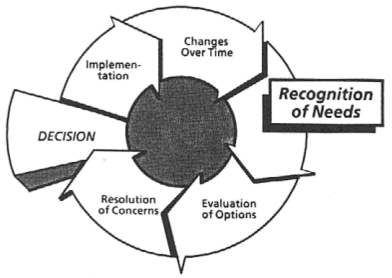
Last week, I introduced the idea of the buying cycle. Specifically, I spoke about the idea that entrepreneurs should spend a considerable amount of time in the “Recognition of Needs” phase. If you have not read the article, click here.

Once you have convinced your customers that they have a problem, you show them your wares. You move into the “Evaluation of Options” phase.

Few people call it the evaluation of options. We more commonly refer to it as a presentation. Let me ask you this, have you ever been to Costco and seen a presentation for the Vitamix blender? This is the essence of the “pitchman.”

Blenders are an interesting case study in the world of entrepreneurship. I do not claim to know much about blenders. But, apparently, the innovations contained within the Vitamin are strength and durability. Fair enough.

As I am sure you know, there is not much of a “Recognition of Needs” phase when it comes to blenders. In as much as the blender was invented in 1922, people are rather well-informed. There exists few, if any, souls who do not know the problem a blender solves.


For this reason, everybody enters the buying cycle (pictured above) in the “Evaluation of Options” phase. Again, this is the presentation stage. Which is why it makes a lot of sense to give demonstrations at Costco

I have never timed how long the Vitamix presentation is. But, it can be rather thorough. This only makes sense in light of the fact that the machines usually range around $400-600.

Contained within this group-presentation, you will also find the “Resolution of Concerns” phase of the buying cycle. How would you resolve the concerns people might have regarding the purpose of an expensive blender?

Well, you would have people give their testimonials about how well the machine has worked for them (though they do not do this at Costco.) You would also offer special payment arrangements, warranties, money-back guarantees, etc.

I only offer the Vitamix example in hopes that you can visual the lesson of these two phases of the buying cycle. How you facilitate an evaluation of your option, and how you resolve your prospective customers' concerns, will be dependent upon many variables.

Regardless of how you do it, the point is, you need to cover these three pieces of the buying puzzle. For the most part, they go roughly in order. But, do not allow yourself to think the process must be linear.

Sometimes things happen. A question can come up, an unexpected event can occur, or any of a host of things can cause the process to go in less than a straight line.

The important thing to embrace is the fact that selling is an integral part of entrepreneurship. And, in order to effectively sell your creations, it in is your best interest to understand how purchasing decisions are made.

I hope this helps.


Monday, May 23, 2016

Selling Innovation


As promised, let us talk a little bit about selling innovation. Last week I asked the question, “How do you sell?” because selling is one of the two entrepreneurial functions.

The thing is this, not all sales processes are created equal. Unfortunately, a lot of advice about selling has been built on the premise that selling is selling. It is just not true. (Remember that old commercial saying, "Motor oil is motor oil"?)

To put it in the simplest of terms, people do not buy things until they have a problem. Some problems people are able to identify on their own. If you are out of Captain Crunch, you know you gotta problem.

For this reason, the way you sell cereal is different from the way you would sell houses. Although not as different as you might think. In both cases, your customer makes their decision without you.

Meaning, people decide to buy cereal, or sell their house, without the help of a salesperson. It is a similar situation with car sales. In all three of these cases, people understand the problems and the solutions.

The sales environment becomes different when we are talking about true entrepreneurship. One way to think of the job of an entrepreneur is that s/he sells innovation.

Innovation can take many forms but, one thing all innovations have in common, is they bring new value to the marketplace. Stated differently, innovation is about solving problems that have not been solved before.

Usually the problem is seemingly minor. Uber has quickly become an enormously successful company. And, when you think about it, the problem Uber solves is pretty simple. Uber is more convenient than a taxicab, thereby saving us time.

Waiting for a cab is not a huge problem. It is not cancer. But, that is how the economy progresses. Lots of little improvements add up to big changes.

Ok, so, as I have said, people do not change their situation, people do not buy things, until they have a perceived problem. As an entrepreneur, this becomes a real challenge, because people do not generally spend time thinking about problems that have no solutions.

As entrepreneurs, we are bringing new solutions to the market. This means, in order to sell innovation, we need to make people aware of their problems. Stated differently, if you sell innovation you need to “break” the person's current situation.

Below you will see a picture depicting the buying cycle which people go through. The image was created by the legend himself, Neil Rackham.


You only need to study the image for a minute to realize that entrepreneurs should spend most of their time working on the “Recognition of Needs” phase. As an entrepreneur, you sell a new solution. So, you need to make people realize they have a problem. A need.

How do we help people realize they have a problem? Well, there are lots of ways but the most effective method is the use of questions. Questions are the levers of change.

Think about it, how do you become aware of the existence of a problem? If you really think about it, I believe you would agree that you become aware of a problem by asking yourself questions.

As an example, how do you know if you are gaining too much weight? With questions, of course. You might ask yourself, “Are I getting too fat?” Or, “Am I becoming unhealthy?” Or, “I wonder how my heart is doing?” Or, “Should I buy some bigger clothes?”

You get the point. We identify problems through the use of questions. Everybody does it privately and, as an entrepreneur, we need to do it publicly as well.

To help people appreciate the solution you provide you are well-advised to ask questions to help them realize the problems that exist. I will give you one last example so you can tune-in to your own inner monologue.

Lately, I have been thinking about this thing called Bitcoin. If you do not know what Bitcoin is, you just asked yourself, “What is Bitcoin?” And, there we have question number one.

I will not, for one second, act like I am an expert on Bitcoin. In fact, I know very little about the service. What I do know is, “Bitcoin is a digital asset and a payment system,” according to Wikipedia.

Here is what I am trying to determine. Do I need to use Bitcoin? As of yet, my answer is, I do not know. I am trying to understand the problems that Bitcoin solves. And, I encourage you to do the same.

As you think through what Bitcoin can do for you, pay close attention to your thoughts. What you will find is that you ask yourself a lot of questions. And, that is the point of this post.

If you want to sell innovation, you need to help people understand your solution by helping them realize the problem. And, in order to do that I recommend we all master the use if questions.

Let me know how it goes.